
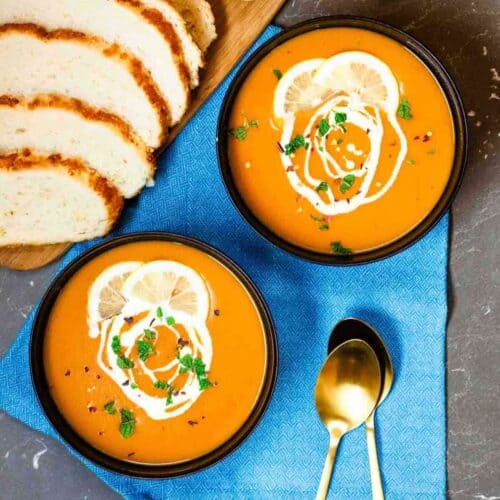
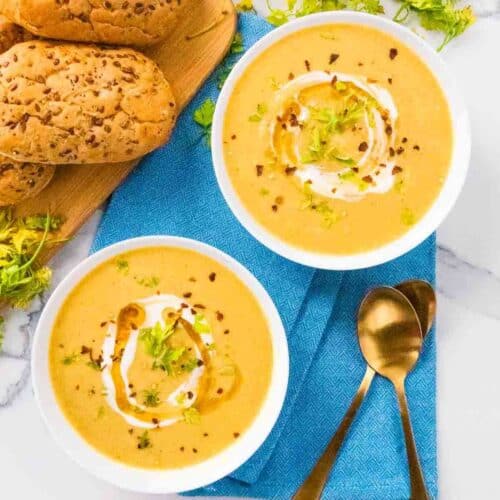
This split pea pottage soup is a delicious thick hearty meal, perfect for the Winter months. It's a Medieval England recipe using pantry staples, fresh vegetables, and delicious diced pancetta.
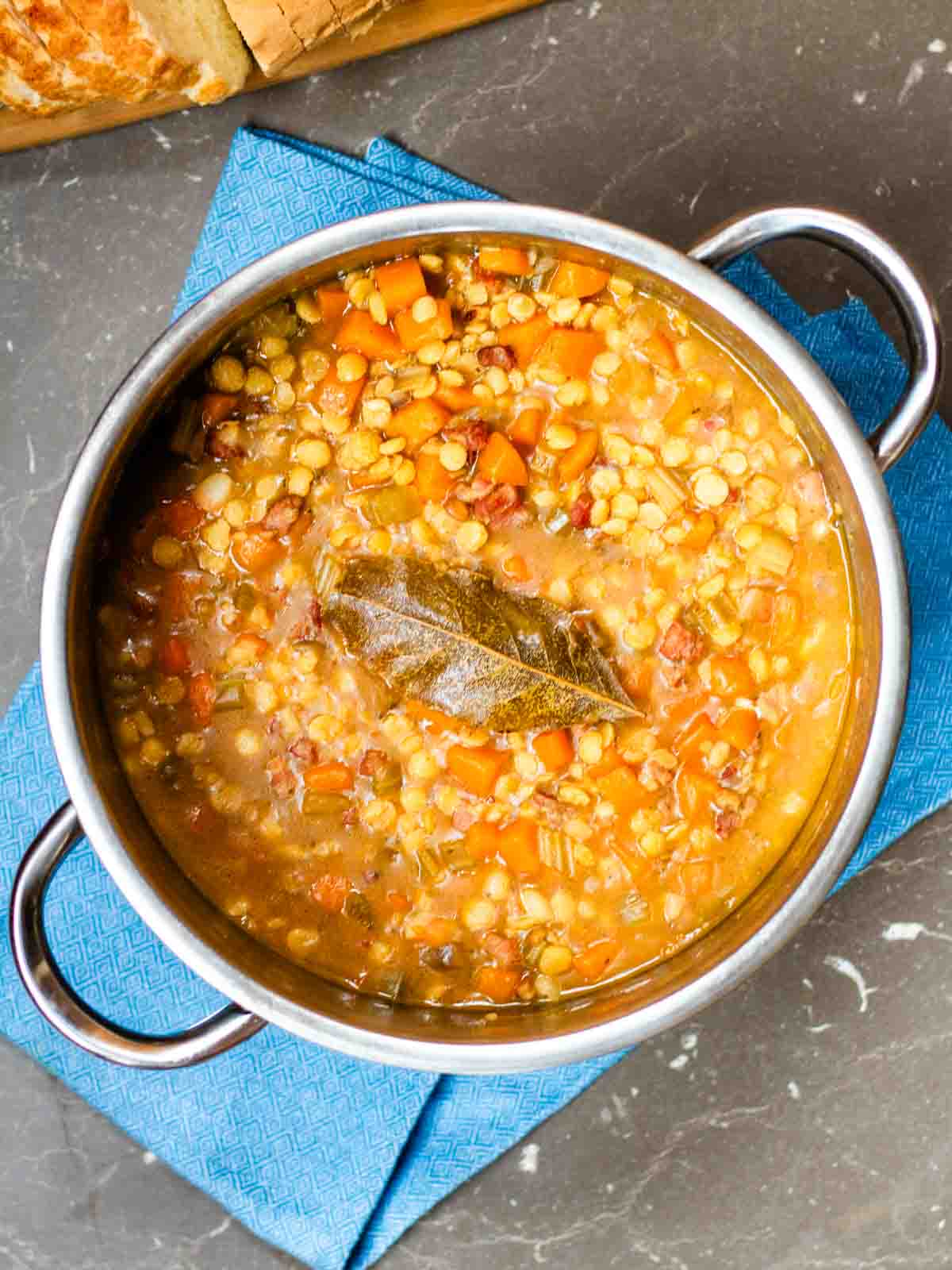
Yellow or green pea pottage recipes were a popular dinner for Medieval peasants in England. Made with dried pulses or legumes, stock, and herbs, it's very filling with essential nutrients.
Cooked in a large pot over an open fire, or on a stove top, it was and is easy to make and customise with whatever vegetables you have at hand.
It can be made vegan, vegetarian, Gluten Free, or cooked with meat like smoky bacon, ham, or gammon to infuse the stock. Then serve as a chunky thick soup or smooth and creamy, depending on your mood.
Jump to:
✔️ Why You'll Love This Recipe
Here are a few reasons why we think you'll love eating this old British Tudor inspired pea soup recipe:
- An easy one pot meal
- Adaptable for most diets
- Minimal preparation time
- Warms you up on a cold day
- Great for batch cooking and freezing
- Great for stoves or as a slow cooker recipe
- It's been enjoyed for centuries because it's so tasty!
- A nutritious and filling main meal with lots of healthy benefits
🛒 Ingredient Notes
Please see the printable recipe card with exact ingredient quantities, preparation instructions and daily values at the bottom of this post.
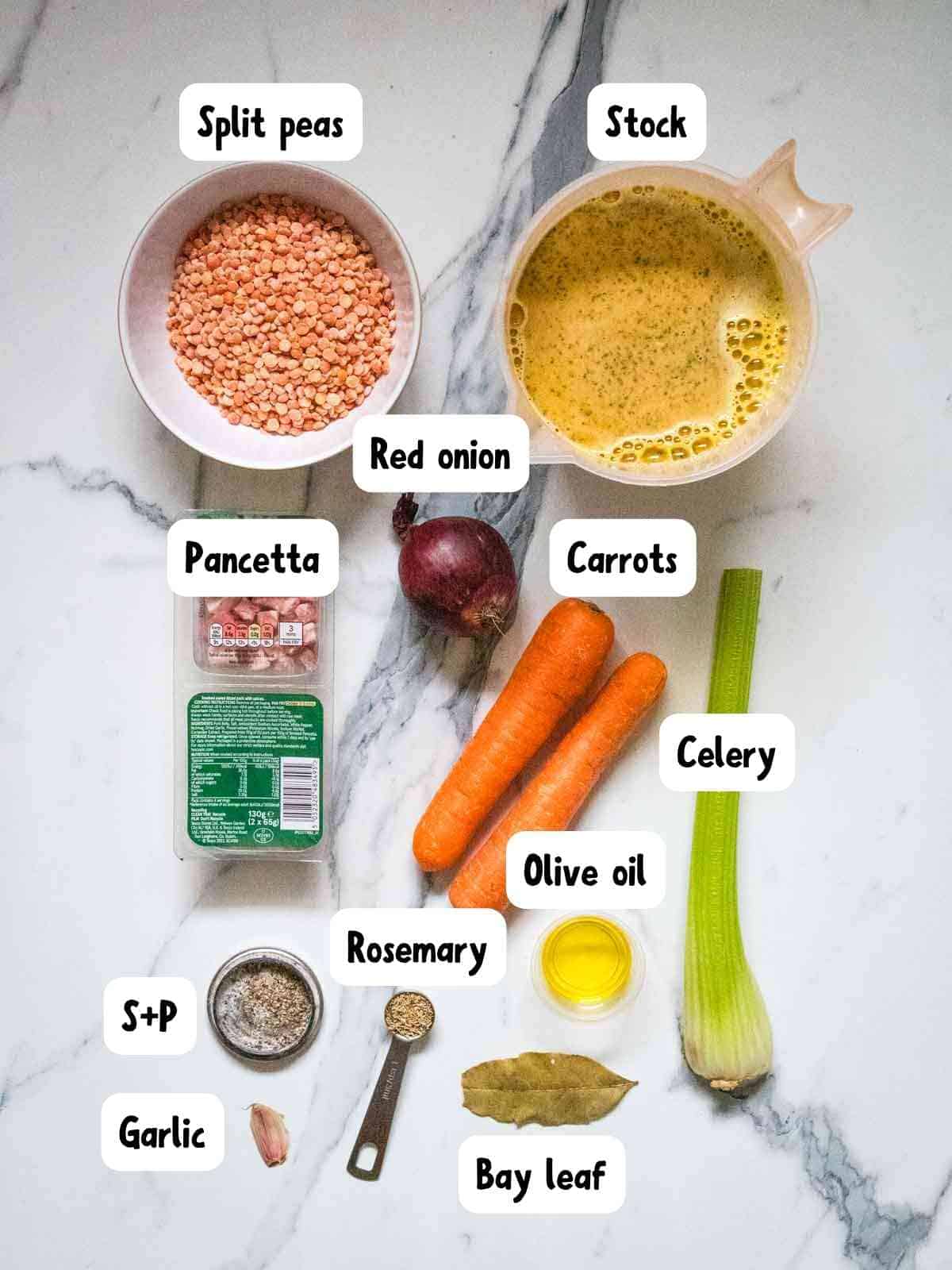
Split peas - you can use dried split yellow or green peas, which are a good source of vitamin C, fibre and protein that may help support cholesterol, the heart, blood pressure, inflammation and more
Olive oil - this has a high smoking point to fry the pancetta and saute the onions and garlic without burning. It's also a healthy fat to help support heart health
Pancetta - or bacon wasn't often eaten by medieval peasants in the Middle Ages, so can be omitted for a vegetarian please pottage soup. However, it adds a lot of flavour, or you can add ham or gammon
Red onion - this is diced and sauteed to add flavour to the stock. Its rich red colour also offers more antioxidants than white onions. Or I recommend shallots if looking for similar health benefits
Garlic - this is one or two cloves of garlic, minced and sauteed for a more complex flavour
Vegetables - I use a mix of carrots for natural sweetness and a large stick of celery for an aromatic flavour, chopped into small pieces
Herbs and spices - this is a bay leaf and dried rosemary, but you can use any garden herbs you wish to compliment the meat and vegetables
Stock - I use vegetable stock, but you could use any flavoured broth or gluten free stock if you wish
Seasoning - this is sea salt and freshly ground black pepper
📋 Instructions
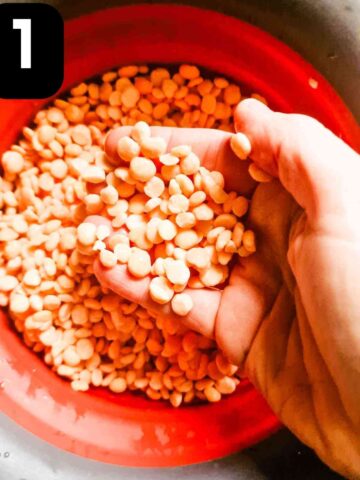
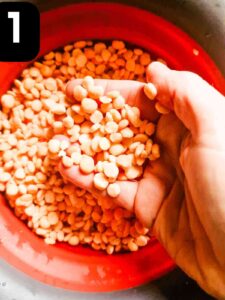
1. Soak peas in cold water overnight, then drain and wash.
(This is to help reduce the total time to cook).
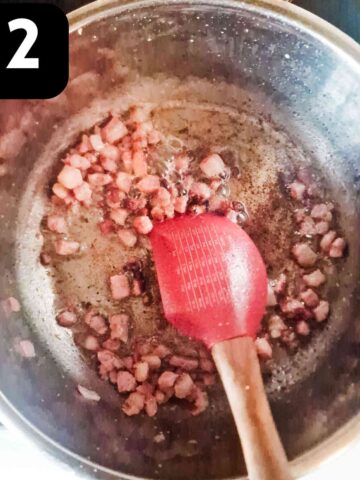
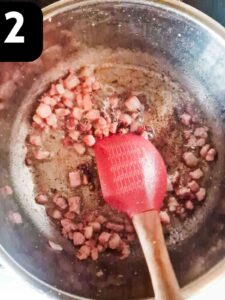
2. Add the oil to a deep pan, and fry the pancetta over medium heat until crispy and golden brown.
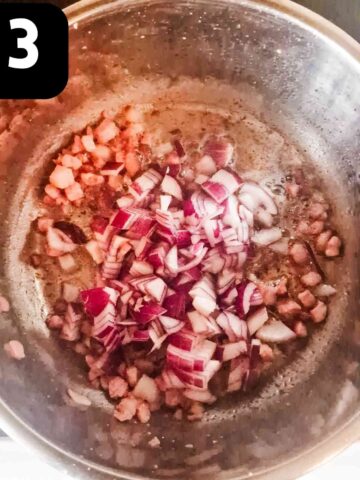
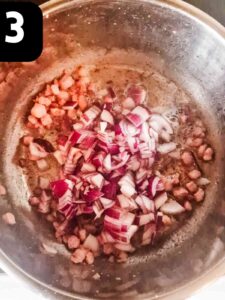
3. Now add the diced onions and garlic and saute until softened.
This should take a couple of minutes.
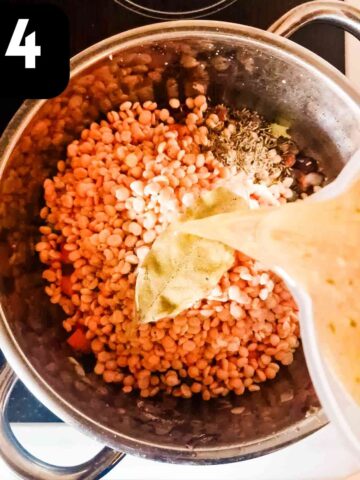
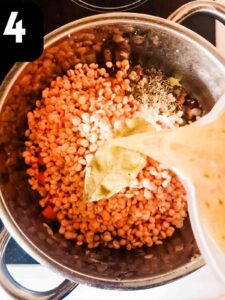
4. Add the remaining vegetables, herbs, spices, seasoning and stock.
Then cover and simmer for 50 minutes until the peas are tender, stirring occasionally.
Tip - for a thicker soup or vegetable stew, simmer for 10 more minutes but stir more frequently to prevent the peas from catching at the bottom of the pan

👩🍳 Substitutions
Depending on your dietary needs, here are a few simple swaps in this pease pottage and still make a really good recipe:
Split peas - swap for pearl barley, red lentils, chickpeas or other soaked legumes and pulses such as aduki, mung beans, etc
Pancetta - swap for chopped bacon, gammon steaks, cooked ham or sausage meat. Or omit for a vegetarian split pea and vegetable soup
Vegetable stock - swap for homemade chicken stock, turkey, beef or make a ham and pea soup. Also, use gluten free or low sodium if needed
Rosemary - swap for dried thyme, sage or oregano for an Italian twist. Or make pea and mint soup, or add a bouquet garni with fresh herbs tied together with string

⚖️ Variations
Here are some different ways you can enhance and personalise your Medieval pottage:
- Vegetable - extra veggies you can add are chopped white potatoes, sweet potatoes, swede, parsnip, mushrooms and more
- Pease pudding - you can blend the ingredients to resemble pease pudding, which is a traditional side dish with cooked meats
- Spicy - add chilli flakes for extra heat
- Creamy - stir in some sour cream for a fresh and creamy taste, or coconut milk at the end, which is great if it has thickened, then you can thin out
- Cheesy - add some grated mature cheddar or parmesan
You can also find my smooth soup maker split pea and ham soup recipe version here. It's very thick and uses less cups of water.

🔪 Equipment
Please note that as an Amazon Associate, I earn from qualifying purchases made through affiliate links.
Potato peeler, sharp knife and a cutting board - this is for some simple vegetable prep. Alternatively, you can skip for 450g or 1lb of mixed frozen veg with carrots, green beans, and garden peas
Large saucepan - or large cast iron dutch oven to cook the soup. Note, this recipe is too large as a soup maker recipe
Measuring cups, spoons and/or weighing scales - note I have carefully weighed and measured the ingredients in grams and cups so you can enjoy it anywhere in the world
Salt and pepper grinder - to add freshly ground seasoning
Spatula - I prefer a silicone spatula as it is easier to use than a wooden one and great in a steel or non stick pan
*Optional hand blender - if you prefer creamy soups, you can use an immersion blender, I recommend adding more stock for a thin pottage, and add sour cream for a smoother texture
❄️ Storage
Storing - Pea potage can be stored in an airtight container and refrigerated for up to 3 days.
Freezing - Cool to room temperature and again, store in a freezer-safe container for up to 3 months.
Reheating - If you want to eat the next day, defrost in the fridge if required and microwave until piping hot, or on the hob or stove over low heat.
💡Pro Tips
- Soak the split peas overnight to reduce the cooking time
- Fry the pancetta before adding it to the pottage to render the fat and create a Maillard effect, where its crispness will add a richer flavour
- Use a good quality stock where you can for the best flavours
- To boost the flavours, you can stir in some lemon juice after cooking
- Stir occasionally, but more towards the end of the 50 minutes to ensure the split peas don't catch at the bottom of the pan, otherwise, you may want to add more stock
🍽️ Serving Suggestions
- Croutons - a delicious way to eat it is with homemade crunchy croutons, or these pan-fried garlic bread crumbs
- Bread - a classic way to enjoy it is some buttered cheesy crusty bread, or toasted sourdough for dipping and soaking up the flavors
- Scones - crumble cheddar cheese scones on top for a luxuriuous taste
- Accompaniment with meat - similar to pease pudding, if very thick, it's great as a side with cooked ham hock, gammon steaks, etc.
❓ FAQ
Pea pottage is a traditional British that was first mentioned in 1591 and shared more recently by food historian, Peter Brears in Cooking and Dining in Tudor and Early Stuart England. It was peasant food made with fresh or cooked peas, egg yolk and saffron strands, ginger or brine, etc.
You can store leftover pea pottage in an airtight container in the refrigerator for up to 3 days, or in the freezer for up to 3 months. Then reheat it on the stove or in the microwave until piping hot.
Yes, you can use fresh or frozen peas for pea pottage, and the great thing is, it doesn't require a long time to cook. If just using peas and celery, it will only take 5-10 minutes. If also using root vegetables, I recommend 20-30 minutes, but add the garden peas in the last 5 minutes.
Yes, you can make pea pottage vegan by omitting the pancetta and using gluten free and vegan stock if required.
Yes, you can add any vegetables or herbs that you like. You could add white potatoes, swede, parsnips, mushrooms, leeks, etc. Other herbs and spices you can use are thyme, sage, parsley, cumin, paprika, or curry powder for more flavour.
Although our diets have changed in more recent times, according to the Medieval Society, pea pottage was originally often made with beaver tail, porpoise, or seal poached in the broth. The stock was also seasoned with vinegar and wine, such as my vitel tone recipe.
🍽️Pairing
Here are some of our favourite recipes we love to dip into our soup recipes!


➕ Related Soup Recipes
Looking for similar soups like this for lunch? Try these:



Why not subscribe to my newsletter to hear about the latest recipes and exclusive news from Tastefully Vikkie? You can also connect with me on social media at Facebook, TikTok, Twitter, and Instagram!
📖 Recipe
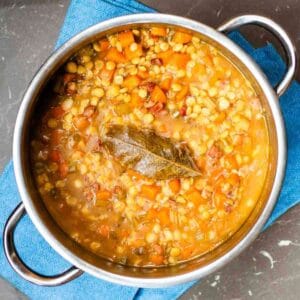
Medieval Split Pea Pottage Vegetable Soup Recipe
Equipment
Ingredients
- 240 g Dried split yellow peas (1 & ⅛ cups) soaked overnight in cold water
- 1 tablespoon Olive oil
- 1 Red onion
- 1 clove Garlic minced
- 130 g Pancetta Diced (1 cup)
- 2 large Carrots
- 1 large Celery stick
- 1.3 litre Vegetable stock (5.5 cups)
- 1 Bay leaf
- 1 teaspoon Rosemary
- Pinch Salt
- Pinch Black pepper
Instructions
- Soak peas in cold water overnight, then drain and wash.

- Add the oil to a deep pan, and fry the pancetta over medium heat until crispy and golden brown.
- Now add the diced onions and garlic and saute until softened.
- Add the remaining vegetables, herbs, spices, seasoning and stock. Then cover and simmer for 50 minutes until the peas are tender, stirring occasionally.SLOW COOKERS: cook on high for 3-4 hours or low for 6-7 hours.INSTANT POT: Cook on high pressure for 15 minutes.
Disclaimer
*This is an unofficial page and has no affiliation or endorsement from Slimming World. Slimming World's website can be found at https://www.slimmingworld.co.uk/. Any syn values are personal estimates and not verified by Slimming World.
Video
Notes
- Soak the split peas overnight to reduce the cooking time
- Fry the pancetta before adding to the pottage to render the fat and create a malliard effect, where its crisipness will add a richer flavour
- Use a good quality stock where you can for the best flavours
- To boost the flavours, you can stir in some lemon juice after cooking
- Stir occasionally, but more towards the end of the 50 minutes to ensure the split peas don't catch at the bottom of the pan, otherwise, you may want to add more stock
- Vegetable - extra veggies you can add are chopped white potatoes, sweet potatoes, swede, parsnip, mushrooms and more
- Pease pudding - you can blend the ingredients to resemble pease pudding, which is a traditional side dish with cooked meats
- Spicy - add chilli flakes for extra heat
- Creamy - stir in some sour cream for a fresh and creamy taste, or coconut milk at the end, which is great if it has thickened, then you can thin out
- Cheesy - add some grated mature cheddar or parmesan



Ann Couldwell
I think that you must have paid me a visit in the night, you just reminded me of my dream. Making a veggie soup in my slow cooker. I’d forgotten about it until I read your post. Definitely on the cards for tomorrow. 🫣😂
Edd
Did they have pancetta in medieval England